How It Works

Every meeting becomes a documented record.

NNWI.ai helps participating agencies and coordinators turn Neighborhood Watch meetings into structured, reviewed, and preserved records. The current pilot uses a five-step governance loop — Capture, Structure, Review, Authorize, Preserve — so that meeting notes, action items, and participant records are organized before they become authoritative.

Defensibility & Scope NNWI.ai does not guarantee funding and does not replace the judgment of grant officers, law enforcement agencies, or public officials. Its role is to help participating agencies and coordinators maintain organized documentation that may support grant readiness, reporting, oversight, and program evaluation. NNWI.ai does not provide legal advice, law enforcement directives, tactical recommendations, or automated public safety decisions.

From the Agency's Perspective

You hold the meeting. NNWI.ai handles the documentation.

Most of what NNWI.ai does happens in the background. From a participating agency's point of view, the experience is simple: hold your Neighborhood Watch meeting on NNWI's secure, self-hosted capture, and a structured, reviewed record arrives afterward. Participants receive a consent disclosure before the meeting begins. The recording and transcript are captured on NNWI hardware and saved to a governed folder — they never leave your control.

Behind that simple experience sits a five-step governance loop that determines how the raw transcript becomes an authoritative record. That loop is what makes the documentation defensible — every record passes through structured intake, human review, and explicit authorization before it is preserved.

No agency-side installation. During the pilot, NNWI captures the meeting for you — or you send us the recording — and transcription and analysis run on NNWI-controlled hardware, never a third-party meeting or AI service, producing structured records that follow a documented review process.
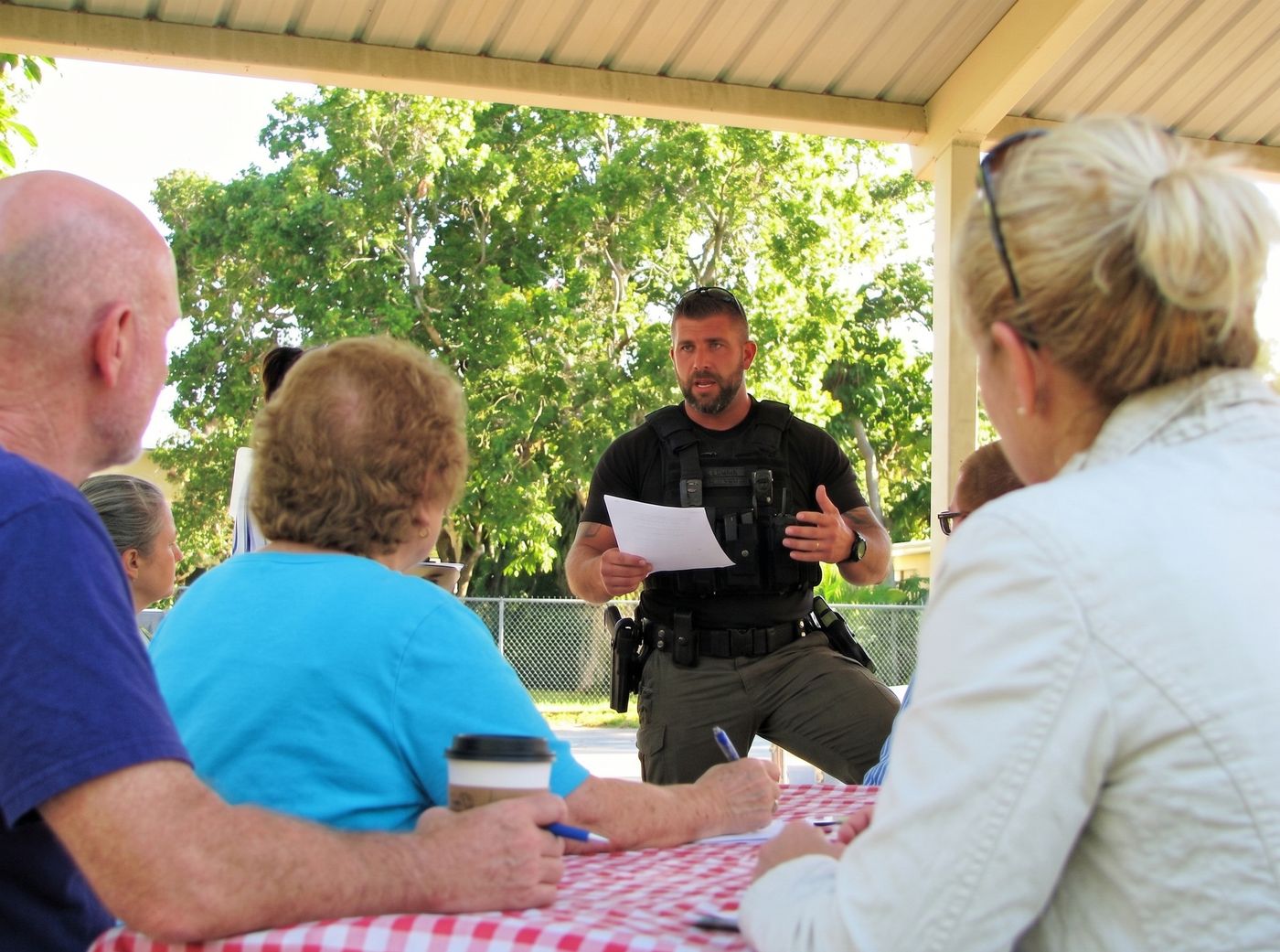
A law enforcement officer briefing residents at an outdoor Neighborhood Watch meeting
You hold the meeting · NNWI.ai preserves the record
The Five-Step Governance Loop

From raw transcript to preserved record.

Every record produced by NNWI.ai's current pilot passes through these five steps. Nothing becomes authoritative without human review at the appropriate step. Records are preserved, never deleted — corrections happen through visible supersession.

01
Capture
Raw Source
The meeting is captured securely on NNWI hardware; the recording and transcript are saved to the agency's governed folder. Source material is preserved exactly as it was created — the original recording and transcript remain available throughout the pipeline.
02
Structure
Controlled Intake
The transcript enters structured intake: tagged with date, agency, participants, and source; normalized into a draft record that carries summary, decisions, and action items. The draft is candidate-only — not authoritative, not yet visible outside the review loop.
03
Review
Human-Supervised
Structured analysis with human-supervised review identifies summaries, action items, and routing targets. A named human reviewer checks the draft for accuracy, sensitivity, and completeness before it can advance.
04
Authorize
Approved
Once reviewed, the record is explicitly authorized. Reviewer identity, timestamp, and applicable reason codes are logged at defined review transitions. The reviewed record becomes the official version.
05
Preserve
Audit-Logged
The authorized record is locked from casual editing and made available to authorized participating agencies or coordinators according to the pilot's access rules. Records are preserved through supersession, not deletion — when a correction is needed, a new version is issued and the prior record remains in the audit log marked as superseded.
The Technical Trust Layer

Want the technical trust layer?

Learn how NNWI.ai protects record integrity with SHA-256 cryptographic fingerprints and an append-only governance model — what a fingerprint proves, how a reviewer verifies a record with standard tools, and why corrections supersede rather than silently overwrite.

Read the Record Integrity Explainer

Security & Data Sovereignty

Your meetings are analyzed on hardware we control — not a third-party AI cloud.

Most AI meeting tools send your recording or transcript to an outside service to be processed. NNWI.ai does not. Transcription and AI analysis run on systems NNWI operates, so your meeting content is never handed to a commercial AI vendor to read.

No Third-Party AI

Transcription and AI summarization run on hardware NNWI controls. Your meeting content is never sent to OpenAI, Google Gemini, or any outside AI service for processing.

Processed, Not Harvested

Meeting content is used only to produce your governed record. It is never used to train outside AI models, sold, or repurposed for advertising or profiling.

You Control the Stack

Because analysis runs in-house, there are no outside per-use AI fees and no vendor rate limits — and the exact model version is fixed and auditable, which matters for a system built on a defensible record.

Built for Sensitive Programs

Keeping AI analysis in-house lets agencies use the system on community and public-safety information that internal policy may not permit sending to a commercial AI cloud.

Phase 2 Roadmap

AI-assisted analysis extends the governance system. It does not replace human review.

NNWI.ai's current pilot operations use structured analysis with human-supervised review at every authority transition. AI-assisted summarization, briefing generation, and educational training support are on the Phase 2 roadmap. Within the governance loop, AI output is treated as evidence, not authority: every AI-generated artifact will require human approval before it becomes part of an authoritative record. No AI-generated output will ever self-authorize within this system.

Current Pilot Capability

What the system does for participating agencies today.

Four current-state capabilities — what the pilot actually produces in operation, not future roadmap features.

Continuity Across Leadership Changes

When a coordinator or agency liaison changes, the program's institutional memory does not walk out the door. Structured records, action item history, and participant records remain organized and accessible to authorized successors.

Defensible Audit Trail

Every record carries an audit log of who reviewed it, when, and what applicable reason codes accompanied defined review transitions. The trail supports oversight inquiries, internal review, and external evaluation — without requiring agencies to reconstruct documentation after the fact.

Coordinated Records Across Agencies

When a meeting involves multiple participating agencies or coordinators, governed copies of the relevant record are made available to authorized participants according to the pilot's access rules — supporting their own internal documentation while maintaining a single source of truth in the governance loop.

Documentation That Supports Grant Reporting

The records the pilot produces may support grant reporting, program evaluation, and oversight obligations the participating agency owns. NNWI.ai does not guarantee funding or any specific federal rating — the documentation supports the agency's own work.

Why This Approach

Standard meeting tools vs. a governed approach.

Most agencies and coordinators already have meeting and note-taking tools. The difference between those tools and NNWI.ai's governed approach is not features — it's the discipline of the review loop and the durability of the record.

Standard Meeting Tools
NNWI.ai Governed Approach
Where AI Runs
Recording or transcript sent to a third-party AI cloud to be processed
Transcription and AI analysis run on hardware NNWI controls — never sent to an outside AI service
Record State
Notes can be edited, lost, or never saved
Records pass through structured intake before becoming authoritative
Review Discipline
Review is optional and often skipped
Human review is required at every authority transition
Corrections
Edits silently overwrite the original
Corrections happen through visible supersession; prior records preserved
Audit Trail
No structured trail of who reviewed what, when
Reviewer identity, timestamp, and applicable reason codes logged at defined review transitions
Multi-Agency Routing
Notes get emailed; copies drift apart
Governed copies made available to authorized participants from a single source of truth
Continuity
Records walk out with departing staff
Structured records survive leadership and coordinator changes
Pilot Phase

Ready to run a governed pilot?

We work with a small number of agencies and coordinators per phase. Tell us about your program and we'll schedule an intake conversation to determine fit, requirements, and next steps.